Wednesday, July 14, 2010

WA-Wyndham


Wyndham is Western Australia’s most northern town. It grew rapidly in the 1880’s as a port for the East Kimberely goldfields, and although the gold declined, Wyndham has remained a port for the pastoral industry in the region, mining companies and produce from the Kununurra area.

At the lookout you can see where five major rivers in the area flow into the Cambridge Gulf. These rivers, the Forrest, Pentecost, Durack, King and Ord are written about in many Australian novels. The area reminded us a lot of Derby especially with the large 8 metre tides and the muddy waters. We also had fresh barramundi for lunch at a local restaurant. It was melt in your mouth delicious.

About 15 klms east of town we drove to Parry’s Lagoon which is a bird watchers dream. Mike and I visited this waterhole a couple of times where they have a bird hide and you can watch the comings and goings of the wildlife. The lagoon is covered in waterlilies and I was fascinated by some of the birds who didn’t seem to want to get their feet wet and hopped from one lilypad to another.

WA-Purnululu National Park and the Bungle Bungles


The very distinctive beehive-shaped domes soaring up to 250 metres above the planes and a network of deep gorges make this area a must see. The 54 klm four wheel drive track in from the highway winds its way across the Maple Downs cattle property before reaching the National Park. We had four water crossings which made the trip exciting for Mike but I always get a little nervous.


We camped in the park for two nights and lapped up the peaceful energy of the place. Each night we had a camp fire, met some other campers, swapped traveling stories and one night were lucky enough to watch a solar eclipse.
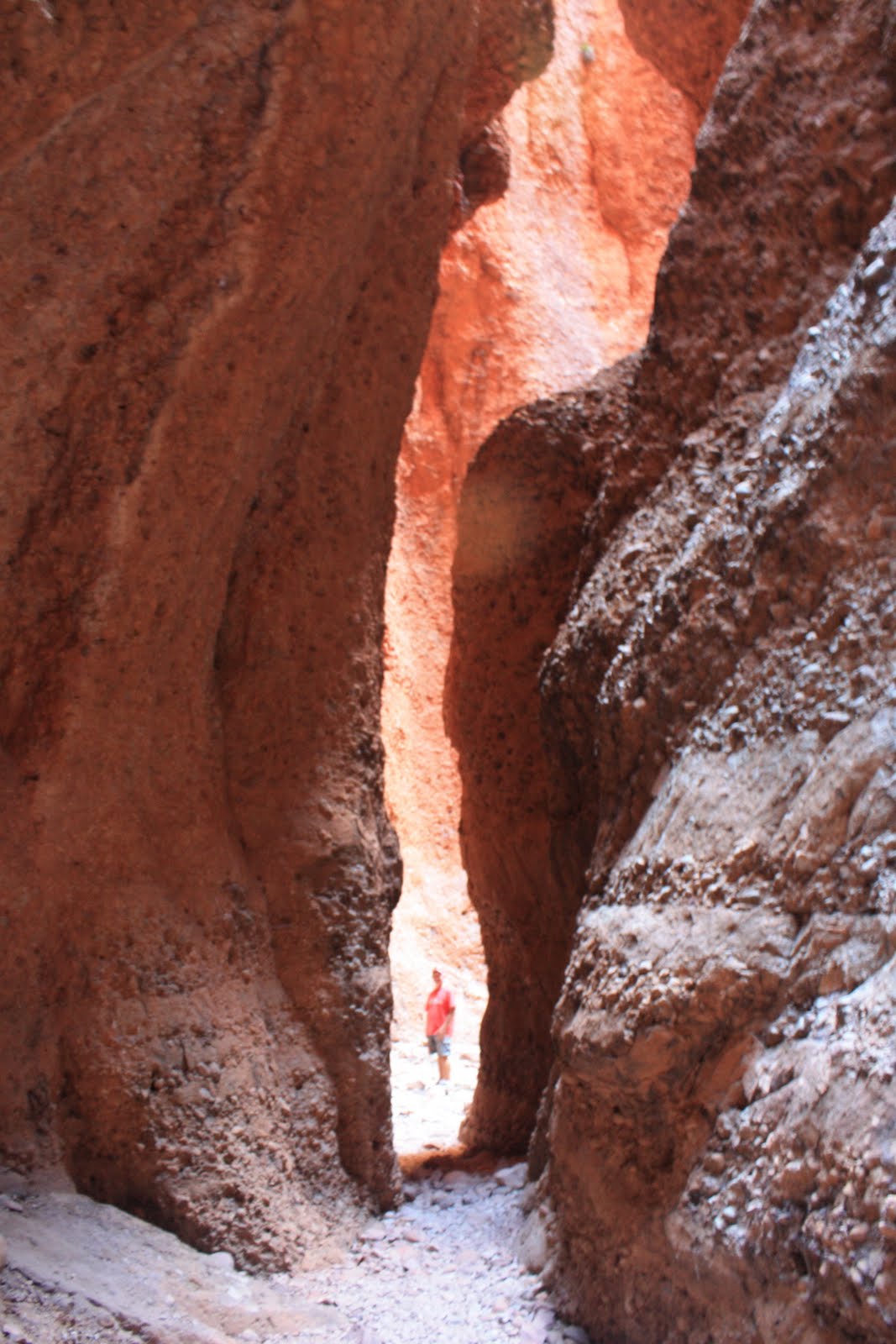
The best way to see places like this is to get out and walk through the gorges. While here, we went on four walks through the domes and gorges and by the time we left we felt that we knew the area well. The scenery is unique and the area is now World Heritage listed.

Saturday, July 10, 2010

WA-Gorges of the West Kimberley

We left our van at the caravan park at Derby and decided to camp in the Windjana National Park, 200 kilometres along the infamous Gibb River Rd. We had seen many cars around town covered in red dust so Mike was a little hesitant to head out on the track but it was much easier than we had imagined. The grader had recently been through and most of the road at the western end is more gravel than red dust . The drive in was beautiful with my new favourite tree, the boab, growing everywhere. We set our tent up at the camp ground and then drove to Tunnel Creek where we donned our bathers, our head lamps and walking shoes ready for our adventure in the underground creek.

This creek tunnel runs 750 metres under the Napier Range and you have to walk through several permanent pools of fresh water of varying depths and clammer and slide over boulders and river rock. Not long after entering the tunnel it is pitch black so our head lamps came in very handy. Even though they say there are no crocodiles, while walking through the water in the dark I was definitely a little apprehensive.

The tunnel is massive with stalagmites and stalagtites everywhere. Part way through, we could smell and hear the bats who make this area their home. During the flood months this massive tunnel is full of raging water which is hard to imagine.


After a wonderful night with our friends, Di and Steve, around the camp fire we headed out on our three hour walk through Windjana Gorge. The gorge has the typical high red cliffs with the Leonard River snaking its way through this ancient limestone reef. Many crocodiles were sunning themselves on the banks and didn’t blink an eye as we walked by.
It was an easy walk and we stopped frequently to marvel at the rock structure and as always appreciate how lucky we are to be seeing these amazing marvels of nature.

After our wonderful time here, we moved on to Fitzroy Crossing, where 90% of the population is Aboriginal. We spent an afternoon cruising Geike Gorge with a local guide informing us on the history of the area and the local wildlife.

Monday, July 5, 2010

WA-Derby


We left the turquoise clear waters and white sandy beaches of Broome and arrived in Derby where the waterways are dirty brown, muddy shoreline and crocodiles. What has happened in such a short distance?

Derby has Australia’s highest tidal range of 11 metres and the highlight of the area is to view the jetty at both high and low tides to see the huge variance. You can drive out onto the jetty where people fish and watch the ships being loaded.

I loved the main street of town which has boab trees planted on the centre dividing strip. The trees are presently in varying stages of loosing their leaves. Just out of town is the “Boab Prison Tree” where years ago, the local Aborigines were captured, put in irons and held under this tree until they were taken to work as slaves on the pearling vessels. In the Kimberley’s there are several “prison trees” where the slaves were held until sent to work. This was a real eye opener to me as I had no idea that we took the Aborigines as slaves

Derby was also a stop off point to replenish our food as we were planning on camping out on the Gibb River road for the next few days.

Tuesday, June 29, 2010

WA-Cape Leveque


We decided to head to Cape Leveque at the tip of the Dampier Peninsula, which is about a 440 klm round trip from Broome and half of it is unsealed. We camped at the beautiful Aboriginal community of Middle Lagoon. We pitched our tents on the edge of the cliff overlooking the bay. Mike and Steve fished off the rocks after wading out to them, and pulled in one of the favoured fish of the area- “bluebone”. We have had two of them while in the Broome area and they are the sweetest fish I have ever eaten. Delicious.!


Half way towards the cape is Beagle Bay, another Aboriginal community where the church was built by the missionaries and the locals in the 1800’s. Mother of Pearl shell has been used to decorate the inside of the church altars and the walls. The inside of this church was also in the movie “Bran Nue Day”


At the tip of the peninsula at One Arm Cove two of the local dogs spend the mornings playing with the sharks. A couple of lemon sharks swim into the bay and the dogs swim out to play. The sharks grab the dogs in their mouths, pull them under the water, drag them along and then let them go. While we were there the dogs were swimming and the sharks came in but they didn’t play with each other. Maybe they didn’t want to be watched.


The Aboriginal Communities on the Peninsula are well kept and the locals very happy and friendly and willing to share the local fishing spots. The dirt roads were rough but it was all worth the experience

Thursday, June 24, 2010

WA-Broome


This romantic town is often described as the southern gateway to the Kimberley. It oozes charm, has a rather checkered and interesting pearling history, is extremely picturesque and is where the red pindan cliffs meets the turquoise blue ocean, and we love it!!


Broome is a melting pot of cultures. The area was originally founded in the late 1800’s as a pearling port which attracted Koepangers, Malays, Chinese, Japanese, and Europeans along with the local aborigines, many who were taken as slaves for work on the boats. It is hard to imagine that over 1000 men died while diving for the mother of pearl shells which was used to make buttons until the discovery of plastics in the mid 1900’s. With the advent of cultured pearls about the same time Broome then became the world’s leading producer of large cultured pearls and they are stunning.


The town of Broome, as you would expect is full of pearl shops, art galleries, restaurants and many beautiful resorts. Mike and I had coffee at many of them enjoying the beauty of their surroundings and deciding which one we would stay at if we had the opportunity to come back without our caravan.


Camel rides along the 22klm Cable Beach are one of the “must do” things when here, and the most popular times are at sunset. Hundreds of people descend onto the beach with their chairs and beverage of choice to enjoy the sun setting over the ocean. We spent many evenings here enjoying this spectacle. A highlight for us was to watch the inaugural Polo match on the beach. Apparently it was such a success that it will now be an annual event.


Another” must do” is to watch a movie at the Sun Cinema. This indoor/ outdoor theatre was built in 1916 and has withstood the war time bombingof Broome, cyclones and king tides.The Australian movie Bran Nue Day was filmed in the Broome area and one of the scenes was filmed in this theatre, and we were very fortunate to see this movie here.


While in Broome Mike spent most mornings fishing of the town jetty and we have eaten some magnificent fish meals. Many times the local gropers or sharks would eat the catch before it could be pulled out of the water. While at the jetty we also saw large water snakes and turtles gliding by. Mike caught a “bluebone” here which is one of the best eating fish in the area but difficult to catch.


“Stairway to the Moon” is a natural phenomena that occurs 2-3 nights each month when the moon rises over the ocean and reflection on the water creates the stairway effect. Hundreds of people line the shores of Roebuck Bay to watch this event.

We loved Broome so much that we extended our 10day stay to a month. We needed a holiday from our holiday! It was beginning to get rather busy by the time we left so we were ready to move on.

Tuesday, June 15, 2010

WA-Barn Hill Station


Barn Hill station is a working cattle station, about 130 klms south of Broome, which has a camping area near the beach. The 10klm drive down another dirt road was rather hairy as this stretch had puddles on the track as well as the cattle crossing every now and then.


The camping ground is very basic, right on the cliffs on the edge of the ocean, with lots of shade trees which is always nice on those hot days. The showers and toilet blocks didn’t have any roofs which made it interesting at night - sitting on the toilet checking out the stars! The hot water is heated by a very primitive system of wood burning and is hot for two hours in both the morning and in the afternoon. The power was generator run so we couldn’t use our air conditioners or any heating elements which meant that we had to switch our hot water to gas. It is handy that our van is so versatile.


Once we walked to the beach we were in for a treat. The red cliffs and rock formations were fascinating. The area also had a dramatic nine metre tide. At high tide there was a narrow strip of sand along the beach and then at low tide, there is a steep decent to the waters edge where masses of huge rocks have been uncovered by the retreating tide
and you would swear that you were on a different beach.


It was wonderul walking along the beaches viewing the cliffs but the shells were few and far between, we had been spoilt by the millions of them at Eighty Mile Beach.